Jagalchi Market
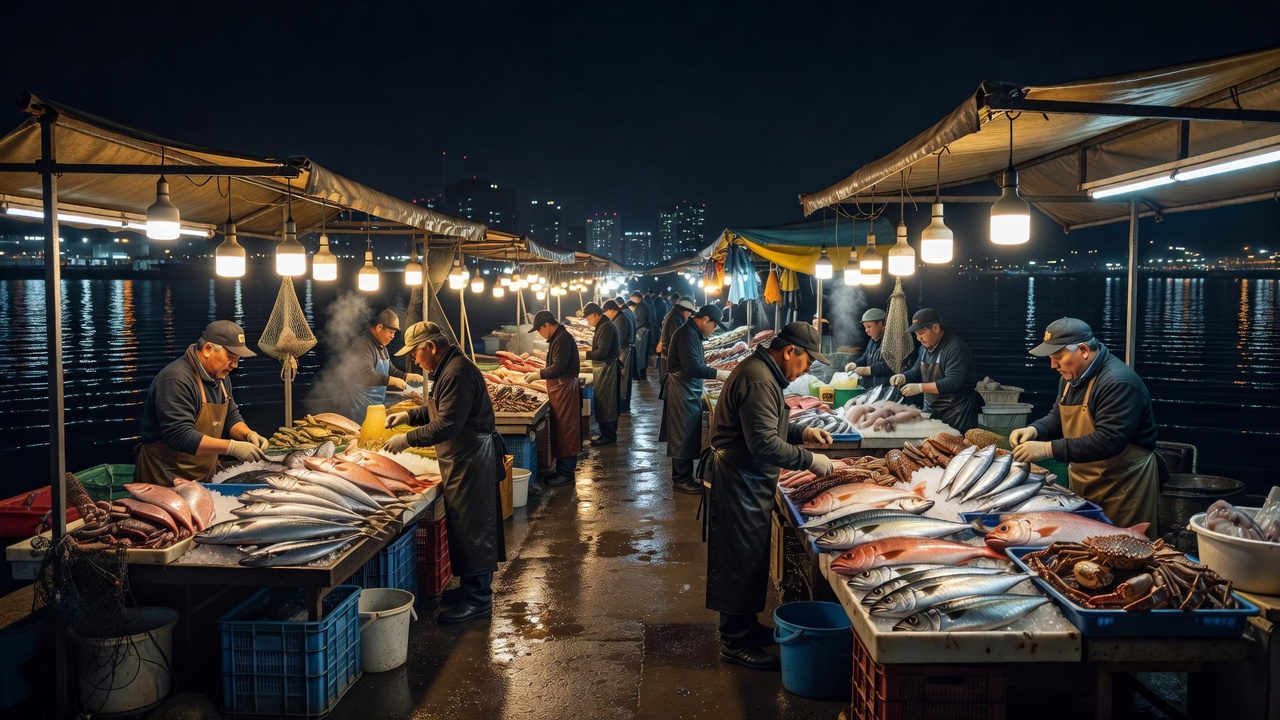
Korea's largest seafood market. Pick from the ground-floor tanks, then take it upstairs to be cut and served for a table fee. The outdoor stalls along the quay are where the ajumma vendors work.
Korea's second city is a port first and a beach resort second. Start at the harbour, climb the hills, finish on the sand.
Most trains from Seoul end at Busan Station, on the old waterfront in Dong-gu. It is a better base than Haeundae if your interest is markets, the harbour and the hill villages. Haeundae suits a beach stay and is a 50-minute metro ride away.
Across the forecourt is Choryang, Busan's Chinatown and Texas Street, and behind it the 168 Stairs, a steep stairway with a monorail beside it, built when refugees settled the slopes during the Korean War.
T-money works on the Busan metro and city buses. Fares are distance-based in two zones; most visitor trips stay in the first.
If you land at Gimhae Airport instead, the Busan–Gimhae Light Rail connects to Line 2 at Sasang and Line 3 at Daejeo.
Runs north–south past Busan Station to Nampo, Jagalchi and Toseong, the stop for Gamcheon.
Busan Station · Nampo · Jagalchi · Toseong · BeomeosaSeomyeon's shopping streets, then east along the bays to Gwangalli and Haeundae.
Seomyeon · Geumnyeonsan · Centum City · HaeundaeUseful mainly for the Gimhae light rail at Daejeo and for Sajik baseball stadium.
Yeonsan · Sajik · Deokcheon · DaejeoBusan spreads along a long, broken coastline. Group stops by line and you avoid crossing the city twice.
Korea's largest seafood market. Pick from the ground-floor tanks, then take it upstairs to be cut and served for a table fee. The outdoor stalls along the quay are where the ajumma vendors work.
Street-food carts selling ssiat hotteok, seed-filled pancakes. Gukje Market and the Bosu-dong book alley are a short walk away.
A painted hillside settlement. Take the local minibus from the bus stop by the hospital rather than walking the steep road up.
Across the bridge: a cliffside lane of white houses above the sea, then Taejongdae's rock headland at the island's tip.
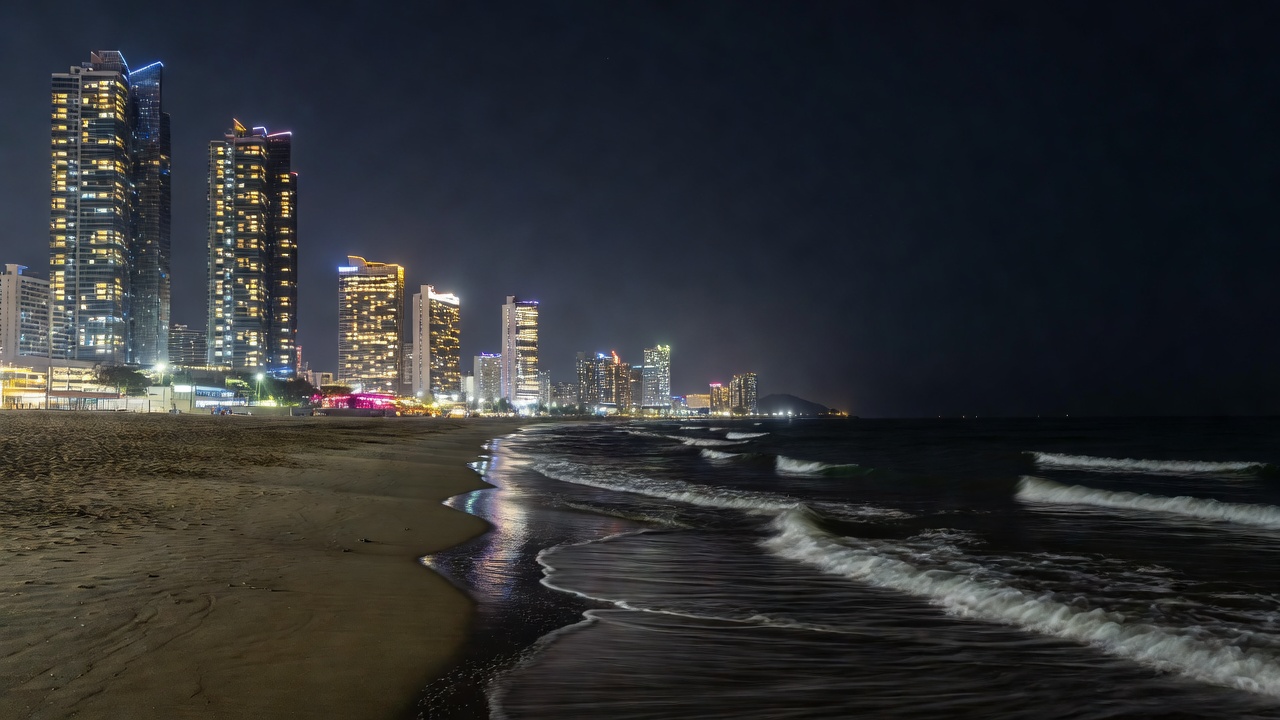
Smaller and livelier than Haeundae, facing the Gwangan Bridge. Weekend evenings bring drone light shows over the water; check the schedule.
The big beach, the Blueline Park coastal tram toward Songjeong, and the Dalmaji hill road for the walk back.
Line 2 · Seomyeon → Haeundae17 stopsabout 30 min
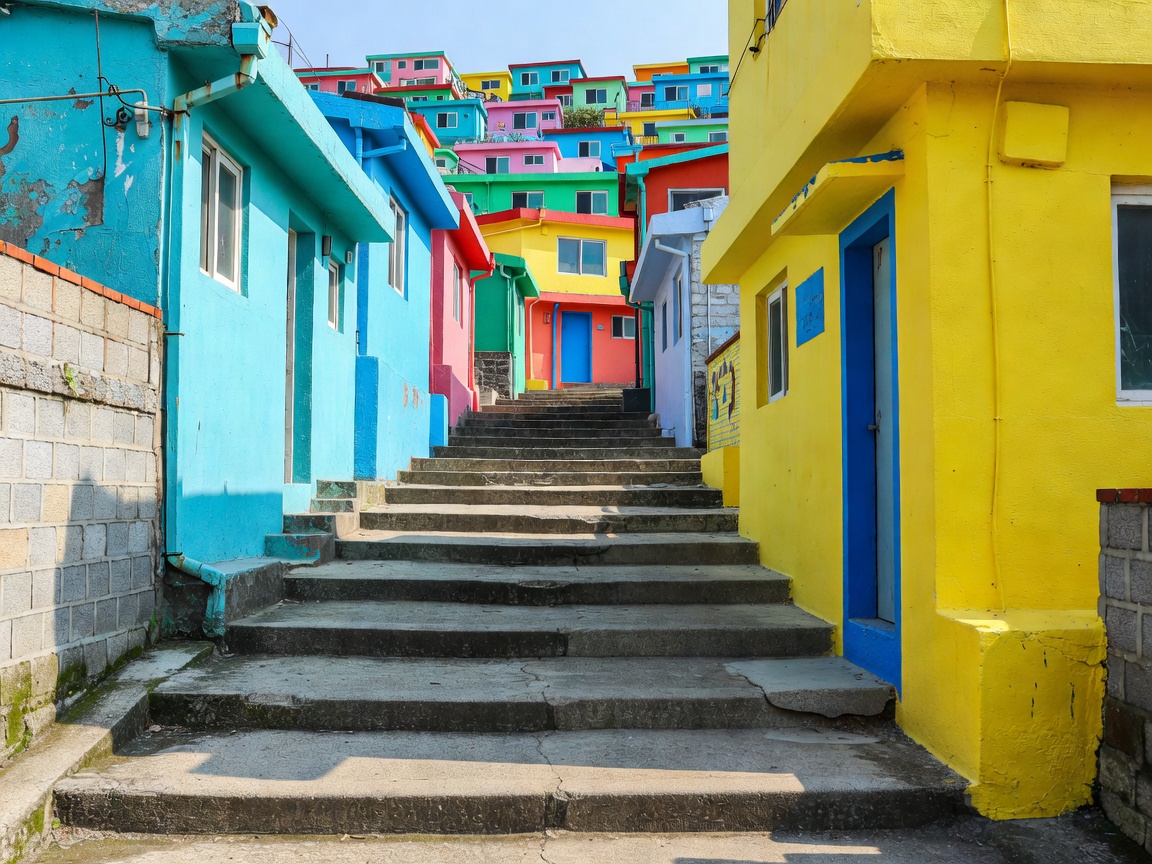
The village started as a refugee settlement in the 1950s. An art project in 2009 painted it and the tour buses followed. People still live there: the stairs are someone's front path.
Arrive before 10:00, buy the stamp map at the information centre and then ignore it. The lanes below the main road are quieter and the views back over the harbour are better.
From the top, walk down toward Amnam-dong and catch a bus to Songdo Beach and its cable car over the water.
Beomeosa sits in the forest at the north end of Line 1. Take the train to Beomeosa station and a short bus up the mountain. Founded in the Silla period, it is a working monastery with a templestay programme and a trail up Geumjeongsan to the old fortress walls.
Haedong Yonggungsa is the opposite: a temple built on rocks over the sea, east of Haeundae. Buses from Haeundae station take around 30 minutes. It is busiest at sunrise on New Year's Day and at weekends; a weekday afternoon is calm.
Busan also has the country's main film festival, BIFF, held each October at the Busan Cinema Center in Centum City (Line 2).
Start on Line 1, switch to Line 2 at Seomyeon, end at the beach.
Minibus up, walk down. Ninety minutes is enough.
Grilled mackerel on the quay or raw fish upstairs.
Hotteok, then the walk up to Busan Tower in Yongdusan Park.
Dwaeji gukbap alley near exit 1 if you are hungry already.
Bridge lights come on after sunset.
End at Mipo for the waterfront.
About cookies We use necessary cookies to run the site and, with your consent, optional ones to measure visits. You can change this at any time. Cookie policy